
That dull, persistent headache you wake up with? The sore jaw that makes your first yawn a chore? These aren’t just signs of a restless night. Often, they’re the first clues your body gives you about nighttime teeth grinding—a surprisingly common condition that can quietly cause damage to your oral health.
The good news is that you’re not alone, and there are simple, effective ways to find relief. The key is to recognise the signs and chat with a professional before a bit of discomfort turns into a bigger problem. Here at City Dentists, our friendly Wellington team is here to help you understand what’s going on and find a solution that works for you.
The Telltale Signs of Night time Teeth Grinding

Many Wellingtonians grind their teeth at night (a condition we call sleep bruxism) without having a clue it’s happening. Because you’re fast asleep, the symptoms are often the only evidence you’ll have. It’s easy to dismiss them as everyday aches, but when you look at them together, they paint a pretty clear picture.
Connecting these dots is the first step toward finding relief and protecting your smile. It’s a widespread issue, with some research suggesting that bruxism is a major dental health concern, affecting an estimated 10-15% of adults in New Zealand to some degree.
Common Physical Symptoms
Do any of these morning complaints sound a bit too familiar? They are classic indicators you might be clenching or grinding while you sleep.
- Persistent Jaw Pain: Waking up with a jaw that feels stiff, tired, or just plain sore is one of the most direct signs.
- Dull Headaches: That constant, low-grade headache, especially the kind that centres around your temples, is often caused by the muscle tension from hours of grinding away.
- Tooth Sensitivity: If hot or cold foods are making you wince more than usual, it could be because the protective enamel layer on your teeth is being worn down by friction.
Visible Signs on Your Teeth
During a routine check-up, we can often spot the physical evidence of bruxism long before you feel any significant pain. Our expert team at City Dentists knows exactly what to look for—the subtle changes that tell a big story.
“Many patients are quite surprised when we point out signs of grinding. They might not have connected their headaches to their dental health, but flattened chewing surfaces or tiny fractures are definitive clues that something is happening overnight. We’re here to help you connect those dots in a calm, reassuring way.”
Visible signs we look for include teeth that appear flattened, worn down, or have small chips and fractures along the edges. Over time, this constant pressure can lead to much more significant issues.
A visit to your dentist gives you a proper diagnosis, helps you understand what’s really going on, and provides the reassurance that simple, effective solutions are within reach.
Uncovering the Triggers Behind Your Teeth Grinding
To find a lasting solution for night time teeth grinding, we first need to get to the bottom of why it’s happening. It’s rarely a single issue. More often than not, it’s a unique mix of factors tied to your lifestyle and even your body’s mechanics. By exploring the common culprits, we can start putting the puzzle together.
For many busy Wellingtonians, the answer often starts with stress and anxiety. The pressure of work deadlines, a hectic family life, or just the general pace of the city can manifest physically while you sleep. Your body might be resting, but your subconscious mind is keeping those jaw muscles tense and engaged.
Physical and Lifestyle Factors
Beyond the daily grind, there are also physical triggers and lifestyle habits that play a surprisingly big role. These are often things you wouldn’t immediately connect to jaw pain or a headache in the morning.
- Your Bite Alignment: If your upper and lower teeth don’t fit together quite right (what we dentists call a ‘malocclusion’), your jaw muscles can struggle to find a comfortable resting position. This constant searching can easily lead to clenching and grinding as the muscles try to compensate.
- Sleep-Related Conditions: Sometimes, grinding is a symptom of another sleep disturbance. Conditions like sleep apnoea can trigger grinding as the body’s way of responding to a temporarily blocked airway. If you also snore or wake up feeling like you haven’t slept at all, it’s worth a conversation.
- Lifestyle Habits: That late-afternoon flat white or an evening glass of wine could be part of the problem. Both caffeine and alcohol are stimulants that can disrupt your natural sleep cycle and increase muscle activity, making grinding much more likely.
It’s helpful to stop thinking of teeth grinding as just a dental problem. Instead, see it as a symptom of something else going on in your body or your life. Once we identify the root causes, we can work together towards a solution that provides real, lasting relief.
Pinpointing Your Personal Triggers
Figuring out what causes your jaw clenching can feel a bit like detective work, but a few simple observations can provide major clues. Try keeping a small journal for a week or two. Jot down your stress levels for the day, what you ate or drank in the evening, and how your jaw feels when you wake up.
This simple act can reveal patterns you’d never have noticed otherwise. Taking a deeper dive into the various causes of jaw clenching and tips to relieve it can also offer more insight into your specific situation.
Here at City Dentists, our job is to help you put these pieces together. When you come in for a consultation, we listen carefully to what you’ve been experiencing and combine that with a thorough dental examination. This gives us the full picture, allowing us to guide you toward the most effective strategies for a quieter, more comfortable night’s sleep.
Actionable At-Home Strategies for Immediate Relief
While getting a professional assessment is the best long-term move, there are things you can start doing tonight to get some relief from teeth grinding. It’s all about creating small, positive changes that signal to your body and jaw that it’s time to rest peacefully.
Think of it as setting the stage for a good night’s sleep. This doesn’t need to be a complicated ritual. It can be as simple as swapping your phone for a book 20 minutes before you turn out the lights or putting on some quiet music. A calm wind-down routine can be incredibly powerful.
This infographic breaks down the most common culprits behind teeth grinding. As you can see, it’s often a mix of stress, lifestyle habits, and sometimes bite issues.
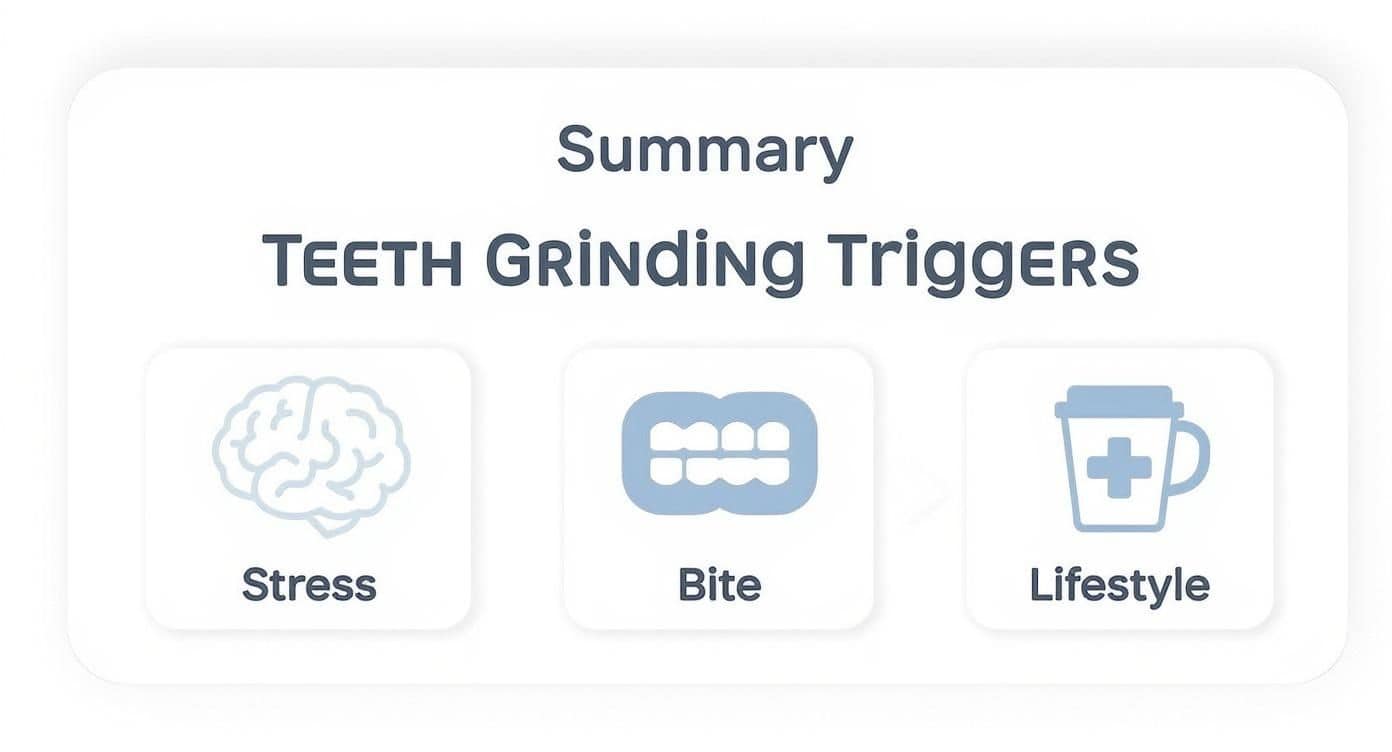
Knowing these triggers helps you pinpoint where to focus your energy—whether that’s finding better ways to manage stress or tweaking your evening habits.
Create a Relaxing Bedtime Environment
Your bedroom should be a sanctuary for sleep, not a hub of activity that keeps your brain buzzing and your jaw muscles firing. To really tackle nighttime grinding, it helps to explore how to improve sleep quality for deeper rest with some great tips that go hand-in-hand with this.
Even tiny adjustments can make a surprising difference:
- Cut back on stimulants: Both caffeine and alcohol can mess with your sleep cycles and ramp up muscle activity. Try to avoid caffeine after 2 pm and give alcohol a miss in the hours leading up to bed.
- Use a warm compress: Before you sleep, place a warm, damp cloth on the sides of your jaw for about 10-15 minutes. It’s a simple trick, but it does wonders for relaxing those tight, tired jaw muscles, making them less prone to clenching overnight.
Here’s a simple checklist to run through each evening to set yourself up for success.
Your Evening Checklist for a Quieter Night
| Action to Take (The Do’s) | Habits to Avoid (The Don’ts) | Why It Helps |
|---|---|---|
| Drink a caffeine-free tea, like chamomile. | Drinking coffee, black tea, or alcohol before bed. | Stimulants can increase muscle activity and disrupt sleep patterns. |
| Apply a warm compress to your jaw for 15 mins. | Chewing on pens, ice, or other hard objects. | This relaxes tense jaw muscles before you sleep. |
| Do light stretches or meditation. | Intense exercise right before bed. | Helps lower cortisol and stress levels, which are major grinding triggers. |
| Read a book or listen to calm music. | Scrolling through your phone in bed. | Blue light and stimulating content can keep your brain overactive. |
Following these simple do’s and don’ts can help break the cycle of tension that often leads to a night of grinding.
Gentle Jaw Exercises and Stretches
Just like you’d stretch out a sore back, your jaw muscles can really benefit from some gentle movements to release the tension they’ve built up all day. These aren’t strenuous workouts; they’re mindful movements designed to remind your jaw how to relax.
“A common habit we see is people clenching their jaw while concentrating on tasks during the day. Consciously relaxing your jaw throughout the day can make a big difference to how it behaves at night. It’s about being more mindful, not adding another chore to your list.”
Give this simple exercise a go:
- Rest your tongue gently on the roof of your mouth, just behind your front teeth.
- Let your jaw hang open slightly, so your teeth aren’t touching.
- Hold this relaxed posture for a few minutes while you focus on slow, steady breathing.
This little trick helps retrain your muscles to adopt a more natural, relaxed position. Many daytime habits feed into nighttime tension, so it’s worth looking into the 4 habits that might be ruining your teeth to see if any of them sound familiar.
By weaving these strategies into your routine, you’re giving yourself the best shot at a quieter, more comfortable night. Think of them as your first line of defence in taking control of your dental health.
When To See A Professional For Dental Solutions
While the at-home strategies we’ve talked about are a fantastic starting point, there comes a time when professional guidance is the best way forward. If you’ve tried managing your symptoms but still wake up with a sore jaw or headache, that’s your cue to book a consultation.
It’s not about admitting defeat. It’s about taking a proactive step to protect your teeth and get some real, lasting relief.
Coming in for a chat is a simple, reassuring process. We get it – for many Wellingtonians, a dental visit can be a little daunting. But at City Dentists, we’re not here to lecture. We’re here to listen, offer gentle advice, and work with you on a solution that actually helps.
The First Step: A Gentle And Thorough Assessment
Your first appointment with us is all about figuring out what’s really going on. We’ll start with a friendly chat about your symptoms—those morning headaches, any jaw clicking, or tooth sensitivity you’ve noticed. This conversation gives us vital clues about how severe your teeth grinding is and what might be triggering it.
Next, we’ll do a careful, gentle examination of your teeth. Our experienced team can spot the telltale signs of bruxism that you’d never see yourself.
We look for things like:
- Wear patterns: Flattened chewing surfaces are a classic sign.
- Tiny fractures: We check for small cracks or chips caused by the constant pressure.
- Enamel loss: This is often the culprit behind increased tooth sensitivity.
- Jaw muscle tenderness: We’ll gently check the muscles around your jaw for tightness or soreness.
This whole process is straightforward and painless. Our goal is to gather all the information we need to give you clear answers and recommend the most effective way forward.
“A professional assessment is crucial because it allows us to create a solution that’s made just for you. One-size-fits-all approaches simply don’t work for bruxism, as everyone’s bite and grinding pattern is unique. We take the time to get it right.”
The Gold Standard: A Custom-Fitted Night Guard
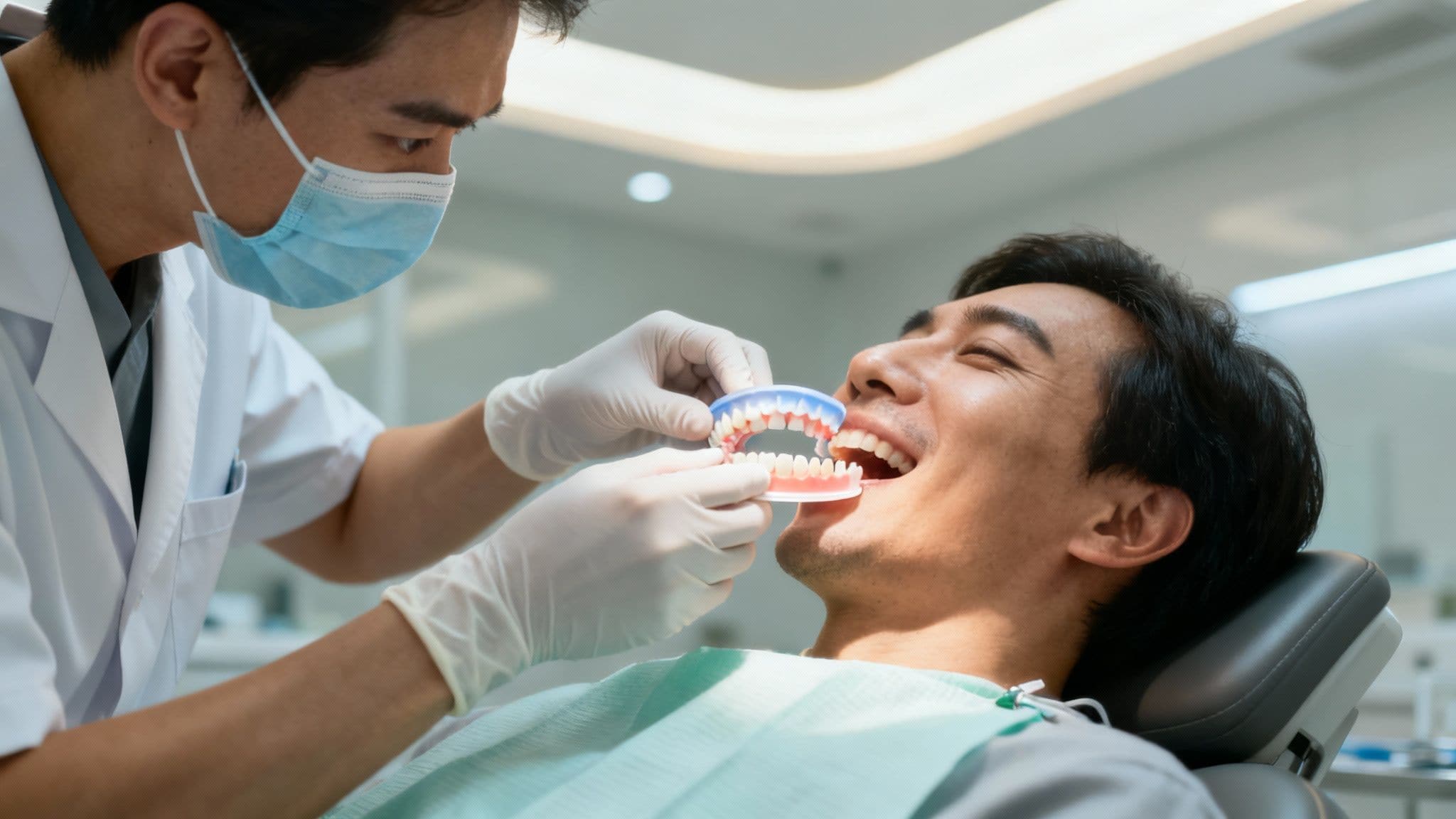
For most people dealing with night time teeth grinding, the single most effective treatment is a custom-fitted night guard. This isn’t like the bulky, one-size-fits-all guards you find at a pharmacy. A professionally made guard is a precise piece of equipment designed for maximum comfort and protection.
It acts as a durable, protective barrier between your upper and lower teeth.
This simple device does two critical things: it physically stops your enamel from being worn down and provides a cushion that helps your tense jaw muscles finally relax. Many patients tell us the relief from morning jaw pain is almost immediate.
The process of creating your guard is quick and precise. We take a careful impression of your teeth—we find this traditional method gives us an incredibly accurate mould to work from. This impression is then sent to a specialised lab where your night guard is crafted from high-quality, durable materials, ensuring a perfect, comfortable fit that won’t disrupt your sleep.
The positive impact of this kind of professional intervention is well-documented. Using a professionally made oral appliance is a proven way to protect your teeth and improve your quality of life.
Your Partners in Lasting Dental Health
Taking on teeth grinding is a huge step towards protecting your long-term health, but it’s not a journey you need to walk alone. Here in Wellington, we want you to feel confident and empowered in your dental health choices, knowing our team at City Dentists is right here to support you.
It can feel like a lot to take in when you’re navigating the signs, causes, and solutions for bruxism. The key is to remember the fundamentals: recognising those morning headaches and that familiar jaw pain, understanding what triggers it, and trying a few things at home for initial relief. Most importantly, it’s about knowing when professional help is the best way forward to prevent any lasting damage.
A Patient-First Philosophy
Our commitment goes far beyond just treating dental issues. We’re here to really listen to your concerns, answer your questions, and work with you to figure out the best solution. Your comfort and confidence are at the heart of everything we do.
We believe the best dental care comes from a partnership between dentist and patient. Your experiences and goals are a vital part of creating a successful treatment plan, and we’re here to collaborate with you every step of the way.
This approach is central to how we operate. We get it—visiting the dentist can be stressful for some people. That’s why we’ve put so much focus on creating a supportive and understanding environment. Our dedication to providing gentle dental care for anxious patients makes sure that every visit is as comfortable and stress-free as it can be.
Whether you need advice on stress-reduction techniques that actually work or a custom-fitted night guard to protect your smile, our team has the expertise and compassion to guide you. Taking that next step to book a consultation isn’t just about fixing a problem—it’s about investing in your future wellbeing. Let us be your partners in achieving lasting dental health.
Common Questions About Teeth Grinding
When it comes to your health, we know that getting clear, straightforward information is essential. It’s completely normal to have questions about bruxism and what the treatment process actually involves.
To help you feel more informed, we’ve put together answers to some of the most common queries our Wellington patients ask us right here at City Dentists. Our goal is to demystify the process and give you the confidence you need to take the next step.
Is a Custom Night Guard Really Better?
Absolutely. While a store-bought guard might seem like a convenient, cheaper option, there’s a world of difference in effectiveness and safety. Think of it like buying reading glasses off the shelf versus getting a proper prescription from an optometrist—one is a generic guess, while the other is made precisely for you.
A custom-fitted guard, created from a precise impression of your teeth, offers several key advantages:
- Superior Protection: It’s crafted from durable, high-quality materials designed to withstand serious grinding forces without breaking down.
- Unmatched Comfort: Because it’s made for your unique bite, it fits snugly and won’t feel bulky or disruptive while you sleep.
- Prevents Further Issues: Poorly fitting over-the-counter guards can sometimes worsen your jaw alignment and strain your muscles, creating new problems instead of solving the old one.
Investing in a professionally made guard isn’t just about comfort; it’s an investment in protecting your teeth from irreversible damage and ensuring you get a truly restful night’s sleep.
Can Teeth Grinding Go Away on Its Own?
This is a question we hear a lot. While the intensity of bruxism can certainly fluctuate, especially with stress levels, it rarely resolves completely on its own once it becomes a chronic habit. Your jaw muscles have developed a pattern, a kind of muscle memory, and it takes a proper intervention to break that cycle.
Ignoring the problem can lead to cumulative damage over the years, like worn-down enamel, cracked teeth, and persistent jaw pain. The most effective approach is to manage the condition proactively by addressing the underlying causes and using a protective night guard. This combination gives you the best chance for long-term relief.
“Many of our patients tell us they wish they’d sought help sooner. Addressing teeth grinding early is the key to preventing more complex and costly dental work down the line. We can help you get ahead of it.”
How Long Until a Night Guard Helps Jaw Pain?
The relief from a custom night guard is often surprisingly quick. Many of our patients report a noticeable reduction in morning jaw soreness, tension headaches, and facial muscle fatigue within the first few nights to a week of consistent use.
The guard immediately provides a protective cushion that stops your teeth from clenching together with intense force. This allows your overworked jaw muscles to finally relax and recover overnight.
While you might feel some immediate improvement, full adaptation and the maximum level of relief typically occur within a few weeks as your muscles adjust to this new, healthier resting state.
Ready to put an end to restless nights and sore mornings? The friendly, expert team at City Dentists is here to help you find a lasting solution. Book your consultation with us today and take the first step towards protecting your smile.