
A tooth canal treatment is a very common procedure we perform at our Wellington clinic to get people out of serious tooth pain and save a natural tooth that’s become badly infected on the inside. It involves carefully removing the infected inner tissue (called the pulp) from the tooth’s root canals, then cleaning, disinfecting, and sealing up the space to stop any future problems.
Your Guide to Understanding Tooth Canal Treatment
For a lot of our Wellington patients, just hearing the words “root canal” is enough to cause a bit of anxiety. But we’re here to set the record straight on a big misconception: modern tooth canal treatments don’t cause pain, they’re the solution to it. The throbbing ache you’re likely feeling from an infected tooth is far worse than the procedure itself.
Think of it like this: an infected nerve inside your tooth is like a splinter lodged deep under your fingernail. It’s a constant, nagging source of pain that just won’t go away on its own. The only way to get relief is to gently remove that splinter. A tooth canal treatment does the exact same thing for your tooth—it removes the source of the infection and pain, letting your body finally heal. Our caring team at City Dentists is here to make that process as comfortable and stress-free as possible.
What Is Happening Inside My Tooth?
To really get why this treatment is so important, it helps to understand a little bit about your tooth’s anatomy. Every tooth is made up of three main layers:
- Enamel: The tough, protective outer shell.
- Dentine: The softer layer of tooth structure sitting just underneath the enamel.
- Pulp: The very centre of the tooth, which is a chamber filled with nerves, blood vessels, and tissue. This is the living part that keeps your tooth alive and able to feel things.
This pulp sits inside a hollow space that runs from the top of your tooth (the crown) all the way down through the roots into your jawbone. We call this space the “root canal.” The trouble starts when deep decay, a crack, or an injury lets bacteria get past the enamel and dentin and into the delicate pulp.
Recognising the Warning Signs
An infection in the pulp can trigger a whole range of symptoms telling you it’s time to see a dentist. As the infection takes hold, it creates pressure inside the tooth and can even spread into the surrounding bone, which is what causes all the discomfort.
The whole point of a tooth canal treatment is to stop this infection dead in its tracks, relieve the pain it’s causing, and save your natural tooth. Keeping your own teeth is always our number one goal at City Dentists. We are committed to providing expert, patient-focused care to our Wellington community.
Here’s a quick rundown of common signs that you might have a tooth infection.
Signs You May Need a Tooth Canal Treatment
This table summarises some of the classic symptoms people experience and what’s likely happening inside the tooth to cause them.
| Symptom | What It Could Mean | Why It Happens |
|---|---|---|
| Severe, persistent toothache | The pulp is inflamed or infected. | Pressure is building up inside the tooth, irritating the nerve endings. |
| Lingering sensitivity | Nerve damage is advanced. | The pulp can’t regulate its response to temperature changes anymore. |
| Swollen or tender gums | The infection is spreading. | The infection has moved out of the tooth root and into the surrounding bone and gum tissue. |
| A “pimple” on the gum | An abscess has formed. | This is a small tunnel (a fistula) your body creates to drain pus from the infection. |
| Tooth discolouration | The pulp inside is dying. | The breakdown of tissue and blood cells inside the tooth can stain it from the inside out. |
Noticing any of these signs is your cue to get things checked out sooner rather than later.
Unfortunately, many people put off getting treatment. It’s a real issue in New Zealand, where high rates of untreated tooth decay lead to much more serious problems down the line. In 2019 alone, a massive 274,000 adults had teeth extracted for conditions that could have often been saved with procedures like a tooth canal treatment.
Catching these warning signs early doesn’t just save you from more pain; it can prevent the need for an extraction and more complex dental work. If you’re worried about any of these symptoms, you can learn more about why you might need a root canal in our detailed guide. This procedure is a safe and highly effective way to get your oral health back on track and keep your smile complete.
A Step-By-Step Walkthrough of Your Treatment
Understanding exactly what happens during a tooth canal treatment can make all the difference, turning any uncertainty you might feel into confidence. Here at City Dentists, we make a point of guiding our Wellington patients through every single stage with total clarity and reassurance. The whole process is built around your comfort.
Many of our patients tell us they’re surprised by how similar the experience feels to getting a standard filling. Let’s walk through the journey together, so you know precisely what to expect when you’re in our care.
Leaving even a small spot of decay untreated gives bacteria a path to travel deeper into the tooth. Eventually, it can reach the nerve, causing a painful infection.
Your Initial Consultation and Diagnosis
The first step is always a thorough consultation at our Wellington clinic. This is our chance to listen to your concerns, chat about your symptoms, and make sure a tooth canal treatment is genuinely the best path forward for you.
To get a clear picture of what’s going on inside your tooth, we’ll take a diagnostic X-ray. This image lets us see the unique shape of your root canals and check for any signs of infection in the bone around the tooth, confirming that the treatment is necessary.
Ensuring Your Complete Comfort
Your comfort is our absolute priority. Before we begin anything, we gently administer a local anaesthetic to completely numb the tooth and the gum area surrounding it.
We always take our time to make sure the anaesthetic has fully kicked in. You won’t feel any pain during the procedure, though you might be aware of some light pressure or vibrations—much like you would with a regular filling. We’re committed to a painless experience.
The Treatment Process Explained Simply
Once you’re completely numb and feeling comfortable, the treatment itself can begin. The easiest way to think of it is like meticulously cleaning out and sealing a tiny, intricate pipe to protect it from any future problems.
Here’s a simple breakdown of how our expert team does it:
- Creating an Opening: First, we make a small, precise opening in the top of the tooth. This gives us access to the inner pulp chamber. To keep the area perfectly clean and dry, we place a small protective sheet called a “dental dam” around the tooth.
- Cleaning the Canals: Using very fine, specialised instruments, we gently remove the infected or inflamed pulp tissue from inside the root canals. This is the step that gets rid of the source of your pain and the infection.
- Disinfecting the Space: After clearing the canals, we thoroughly clean and disinfect the internal space to make sure every last bit of bacteria is removed. This is a critical step for preventing the infection from ever coming back.
Our meticulous approach ensures that the inside of your tooth is completely cleaned and disinfected. This sets the foundation for a successful, long-lasting result, allowing your body to heal and saving your natural tooth.
This careful cleaning process is what stops the pain and allows the tooth to be saved for years to come.
Filling and Sealing the Tooth
With the canals spotlessly clean and disinfected, the next job is to fill that empty space. We use a biocompatible, rubber-like material called gutta-percha to completely seal the canals. Think of it as an internal bandage that prevents bacteria from ever getting back in.
After the canals are sealed, we place a temporary filling in the opening of your tooth. This protects it while it heals and before your final restoration is ready. You can dive deeper into the details by reading our blog post on what to expect from a root canal treatment.
The Final Step: A Protective Crown
A tooth that’s had canal treatment is no longer vital, which means it can become more brittle over time. To give it the strength it needs for everyday chewing and to protect it from fracturing, a permanent crown is the final, essential step.
At a follow-up appointment, we’ll take a detailed impression of your tooth. This is used to create a custom-made crown that fits perfectly and matches the colour of your other teeth. Once it’s placed, your tooth’s full function and appearance are restored, letting you smile, eat, and speak with complete confidence.
Why Saving Your Natural Tooth Matters
When you’re dealing with a severe toothache, it’s completely understandable to want one thing: immediate relief. But choosing a tooth canal treatment is about more than just a quick fix—it’s a smart investment in your long-term oral health. The most obvious win, of course, is getting lasting relief from the intense pain an infected tooth can cause.
Beyond just stopping the pain, the procedure accomplishes something far more important: it saves your natural tooth. While that might sound simple, the benefits of keeping your own tooth are massive and often get overlooked.
The Ripple Effect of a Healthy Bite
Think of your teeth as a perfectly organised team. Each one has a specific job to do, and just as importantly, it helps hold its neighbours in the right spot. Keeping your natural tooth right where it belongs preserves this delicate balance.
This ensures your bite stays stable, lets you chew properly, and stops nearby teeth from tilting or drifting out of place. It’s a bit like a bookshelf—if you pull one book out, the others start to lean and shift. Your smile works in a very similar way.
Choosing to save your tooth is a proactive decision that protects the entire structure of your smile. It’s often the most conservative and effective way to maintain your natural alignment and function for years to come.
Losing a tooth can set off a chain reaction of problems that are more significant than you might think. We dive deep into this topic in our guide on the consequences of losing a tooth, covering everything from bone loss to changes in your facial structure.
Tooth Canal Treatment Versus Extraction
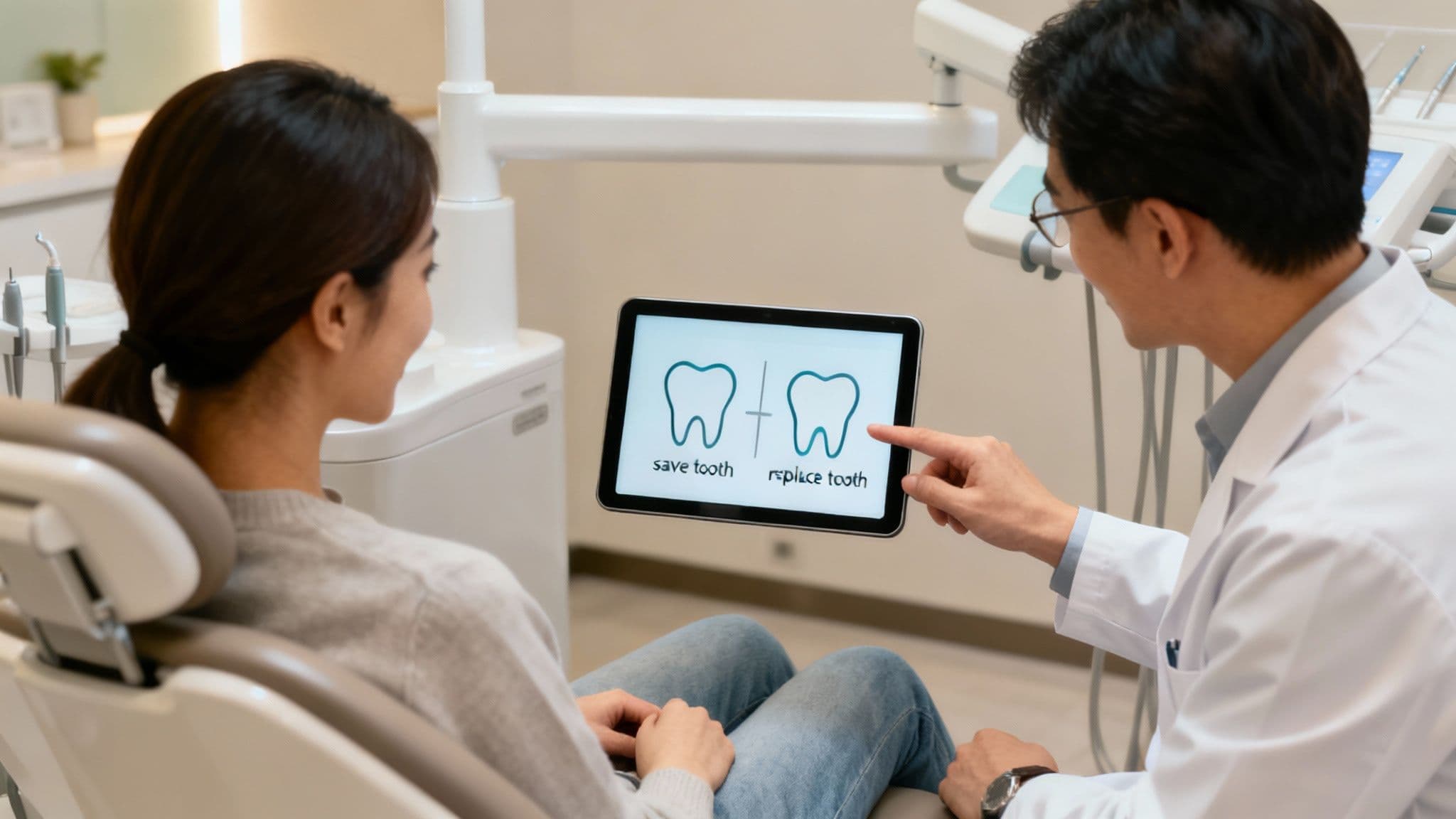
The main alternative to a tooth canal is simply having the tooth pulled out. While extraction might seem like the easier or faster option at first, it often paves the way for more complicated and expensive problems down the line.
A missing tooth can trigger a cascade of issues:
- Difficulty Chewing: Losing even one tooth, especially a molar at the back, can make it much harder to comfortably eat the foods you love.
- Shifting Teeth: The gap left behind is like an open invitation for neighbouring teeth to drift, which can mess up your bite and create new alignment headaches.
- Bone Loss: Your jawbone needs stimulation from the tooth root to stay strong and dense. Without it, the bone starts to shrink away.
- Future Costs: Replacing a missing tooth with a dental implant or a bridge is a far more involved and expensive process than saving the original tooth in the first place.
By choosing to save your tooth, you’re actively sidestepping these future complications.
Modern tooth canal treatment is a highly reliable and routine procedure designed to preserve your natural smile. In fact, studies focused on care right here in New Zealand show impressive outcomes. Research has found a success rate of 87.8% for teeth that still had living pulp before the treatment started, cementing its status as a dependable way to avoid extraction. You can read more about the findings on treatment success rates.
Ultimately, if you can see this procedure not as something to be endured, but as a proactive choice, you’ll be protecting your smile, your health, and your wallet for years to come.
Your Aftercare Plan for a Smooth Recovery
The work isn’t over just because you’ve left the dentist’s chair. What you do after your root canal is every bit as important as the procedure itself for a successful, long-lasting result.
Think of the next few days as a partnership between you and your tooth. Giving it the gentle care it needs to heal properly is the key to a comfortable and speedy recovery. We’ll walk you through exactly what to expect so you can navigate the post-treatment period with confidence.

Immediately After Your Appointment
Once your treatment at our Wellington clinic is finished, your mouth will feel numb for a few hours from the local anaesthetic. It’s a strange sensation, but it’s best to avoid eating until the feeling fully returns. This stops you from accidentally biting your cheek or tongue.
It’s completely normal to feel some mild tenderness or sensitivity in the area for a few days as your body’s natural healing response kicks in. For most people, this is easily handled with standard over-the-counter pain relief, like ibuprofen or paracetamol.
Gentle Oral Hygiene Is Key
Keeping your mouth clean is crucial for healing, but you’ll need to be gentle around the treated tooth for a little while. You can, and absolutely should, continue to brush and floss your other teeth as you normally would. Just take extra care around the temporary filling.
A soft-bristled toothbrush and gentle motions are your best friends here. When you floss, slide the floss out from the side of the tooth instead of pulling it up and out. This small change helps prevent you from accidentally dislodging the temporary filling.
The temporary filling we place after your treatment is really just a placeholder. It protects the inside of your tooth while it heals, but it isn’t designed for heavy-duty chewing. Being mindful of it is the best way to keep your tooth safe until we can fit the final crown.
What to Eat During Recovery
Your tooth is a bit more vulnerable until that permanent crown is in place. To protect it, we recommend sticking to a soft food diet for the first few days to minimise any pressure on the tooth and its temporary filling.
Here are a few easy-to-eat ideas:
- Soft and Smooth Foods: Yoghurt, smoothies, soups, and scrambled eggs are perfect.
- Well-Cooked Vegetables: Think mashed potatoes or steamed carrots that are gentle on your teeth.
- Tender Proteins: Soft-cooked fish or minced meat require very little chewing.
You’ll want to steer clear of anything hard, crunchy, or sticky. Foods like nuts, hard lollies, and chewy caramels can put the temporary filling at risk, so it’s best to avoid them until your tooth is fully restored. For more handy ideas, check out our 8 tips for speeding up root canal recovery.
The All-Important Final Crown
Your follow-up appointment to have the permanent crown fitted isn’t optional—it’s the final, essential step in the whole process. A tooth that’s had a root canal can become more brittle over time, and the crown acts like a protective helmet.
This final restoration seals the tooth completely from bacteria, gives it back its full strength for chewing, and makes sure it blends seamlessly with the rest of your smile. Making it to this appointment is non-negotiable for the long-term health and survival of your tooth.
Navigating Treatment Costs and Comfort Options
Let’s talk about two of the most important parts of any dental treatment: what it costs and how you’ll feel during the procedure. We believe being upfront and clear about both is key to a good experience. When you understand all the details, financially and physically, you can make decisions about your health with total confidence. Here at our Wellington clinic, we make sure these conversations happen right from the start, so there are no surprises.
Understanding the Investment in Your Tooth
The cost of a tooth canal treatment isn’t a fixed price, simply because every tooth and every situation is different. We’re always transparent about the factors that go into the final cost.
A few key things determine the price:
- Tooth Location: Your front teeth are usually the most straightforward. They typically have a single, straight root canal. Molars, on the other hand, are the workhorses at the back of your mouth and can have three or more canals, often with tricky curves that need more time and precision.
- Treatment Complexity: Sometimes a tooth has an unusual root structure or a stubborn infection that needs more than one visit to resolve. These factors can also influence the overall cost.
It’s also helpful to think about the alternative. While saving a tooth with a root canal is an investment, it’s almost always more affordable in the long run than pulling it out. An extraction might seem cheaper upfront, but it often kicks off a chain of more expensive treatments, like needing a bridge or dental implant to stop other teeth from shifting out of place.
Investing in a tooth canal treatment is a proactive step that saves you from more complex, costly, and time-consuming dental work in the future. It’s the most effective way to preserve your natural smile and maintain your long-term oral health.
The reality is that dental costs have climbed steeply over the years. Between 1978 and 2023, the fees for common treatments like root canals shot up by between 75% and 236%—much faster than wages. We know this financial pressure is a big reason some New Zealanders put off needed care, which is exactly why we prioritise clear, honest cost discussions from day one. You can read more about these dental fee trends in New Zealand.
Our Unwavering Commitment to Your Comfort
Just as important as the cost is making sure you’re comfortable through the whole process. At City Dentists, our entire philosophy is built around ensuring every patient feels safe, looked after, and completely at ease. Thanks to modern dentistry, the old horror stories about painful root canals are well and truly a thing of the past.
We use highly effective local anaesthetics to make sure the tooth and the whole area around it are profoundly numb before we even start. We take our time and let the anaesthetic do its job properly. You won’t feel any pain during the procedure—the most you’ll feel is some gentle pressure.
Sedation Options for Anxious Patients
We get it. For many people, dental anxiety is a real and significant hurdle to getting the care they need. If you feel nervous about your appointment, please know you’re not alone, and we’re here to help.
For our patients who need a bit of extra help to relax, we offer effective sedation options. This helps you stay calm and comfortable while we take care of everything. Our goal is to create an environment where you feel supported and in control. To learn more, check out our detailed guide on the sedation dentistry we offer at City Dentists.
Your Top Questions About Tooth Canal Treatment
It’s completely normal to have a few questions rattling around in your head when you’re thinking about any dental procedure. Getting clear, honest answers is the best way to feel calm and confident about your treatment.
Here at our Wellington practice, we’ve heard just about every question under the sun when it comes to tooth canals. So, we’ve put together this final section to tackle the things our patients ask us most often.
Is a Tooth Canal Treatment Painful?
This is easily the number one concern we hear, and we’re always happy to set the record straight: no. The old horror stories about root canals just don’t hold up with modern dentistry. Thanks to highly effective local anaesthetics and our gentle techniques, the procedure itself is comfortable and pain-free.
You might feel some light pressure or vibrations—much like having a regular filling done—but you won’t feel any pain. In fact, the whole point of a tooth canal treatment is to get rid of the awful, throbbing pain that a tooth infection causes, not create more of it.
Any minor sensitivity you might feel for a day or two afterwards is just a normal part of your body’s healing process. It’s easily managed with the same over-the-counter pain relievers you’d take for a headache.
How Long Does the Treatment Take?
The time can vary a little, but we can give you a pretty good idea of what to expect. Most tooth canal treatments are wrapped up in two or three appointments at our Wellington clinic, with each visit typically lasting between 30 to 60 minutes.
What makes the difference? A couple of key things:
- Which tooth we’re working on: A front tooth with one straight canal is often much quicker to treat than a molar at the back, which can have several tricky, curved canals needing more detailed work.
- The extent of the infection: If the infection is more advanced, we’ll need to spend extra time making sure everything is thoroughly cleaned and disinfected before we seal the tooth up.
We’ll always have a proper chat with you before we start, so you’ll know exactly what to expect for your specific tooth. Our focus is always on doing a meticulous job, never on rushing.
What Happens If I Put Off Treatment?
Delaying a needed tooth canal treatment is something we strongly advise against. It lets a small, manageable problem spiral into something much more serious. An infection inside a tooth simply can’t heal on its own—it will only get worse.
Putting it off gives the bacteria a free pass to multiply and spread. This can lead to some pretty nasty consequences:
- Worsening Pain: That initial toothache can ramp up into severe, constant pain that ruins your sleep and your day.
- Abscess Formation: The infection can push out from the tip of the tooth root, forming a painful, pus-filled pocket in your jawbone.
- Bone Damage: A long-term infection can literally eat away at the bone that holds your tooth in place, weakening its foundation.
- Tooth Loss: Eventually, the tooth can become so damaged by infection and decay that it can’t be saved. At that point, taking the tooth out is the only option left.
Putting off treatment is like giving the infection a green light to cause more chaos. Acting quickly not only saves you from a world of pain but also protects your tooth, your jawbone, and prevents the need for more complex and expensive procedures down the track.
Will My Tooth Be ‘Dead’ After the Treatment?
This is a really common question, and it’s based on an old myth. While the procedure does remove the nerve and blood vessels from inside the tooth, the tooth itself is far from “dead.”
Think of it this way: your tooth is still a living part of your body. It remains firmly anchored in your jaw by living tissues and ligaments that continue to feed it from the outside. It will still work perfectly for biting and chewing, and it will look completely natural.
The only real difference you’ll notice is that the tooth can no longer feel hot or cold, since the internal nerve that senses temperature is gone. Because it becomes more brittle without its internal pulp, that final protective crown is vital for its long-term survival—it acts like a helmet, keeping it strong and safe for years to come.
Ready to leave tooth pain in the past and save your smile? The caring and experienced team at City Dentists is here to provide gentle, expert care right here in Wellington. We’ll answer all your questions and make sure you’re comfortable every step of the way.